
BLOG
Dressed in Dragonscales Comes to Audio
he Dragon is dead. The endless winter is broken. Polar should finally be free.
Of course, it isn't.
On 5 September, Dressed in Dragonscales, the second book in The Realm of Polar, will be released as an audiobook on Spotify.
This book goes further into the parts of Polar I enjoy most: broken timelines, ancient magic, bad decisions, desperate alliances and people trying to survive in a world that does not particularly care whether they do.
It also introduces one of the strangest characters I have written: a Traveller dressed in living Dragonscales, moving through time and changing history one life at a time.
Writing Polar has always been different from writing The World Within. It is darker, more violent, more absurd and much less interested in behaving itself.
That is probably why I like returning to it.
With The Ice Dragon’s Curse already available in audio, Dressed in Dragonscales now brings the second part of The Realm of Polar to listeners as well.
If you like dark fantasy, dragons, fractured timelines and victories that rarely come without a price, this one is for you.

How Sagan om Världen Innanför Became The World Within
In 2018, I published my first novel, Den försvunna färgen. It became the beginning of Sagan om Världen Innanför, a fantasy series about Timothy and Anna, hidden worlds, strange creatures, friendship and a form of magic built around colour.
The World Within is Johan Edfeldt’s middle-grade fantasy series for readers aged 9–12.
Det förlorade svärdet followed in 2020 and Den stora flykten in 2023.
Three books sounds suspiciously like a trilogy.
It isn't.
The World Within was built as a much larger story, with eight books planned. The first three are simply the first part of that journey. Other books, worlds and projects have appeared in between, but Timothy and Anna's story was never meant to end with book three.
Over the past few years, I have also been bringing the series into English.
Den försvunna färgen became The Lost Colour. Det förlorade svärdet became The Lost Sword. And Den stora flykten became The Great Escape.
Together, they are now The World Within.
Translating them has been more than changing Swedish words into English ones. It has meant returning to stories I first wrote years ago, looking at them again and finding the right voice for the same characters and world in another language.
And now they are moving beyond the page as well.
The audiobook of The Lost Sword will be released on Spotify on 21 September 2026, continuing Timothy and Anna's journey through The World Within.
Three books written. Three books translated.
Five still waiting.

The Lost Colour as Audiobook

The Lost Sword as Audiobook is coming on September 21st.

Någonting har legat begravt länge

Någonting har legat begravt länge.
Inte bara i jorden.
I historien.
Vi bygger vår bild av det förflutna av det som råkat överleva – några ristningar, några föremål, några ruiner. Resten är tystnad.
Men tystnad är inte samma sak som tomhet.
Under en längre tid har jag arbetat med en ny roman. En berättelse som börjar på nyårsnatten 1984, när fyra vänner ser något falla från himlen över ett svenskt fjäll.
Det de hittar borde inte finnas.
Och ändå ligger det där.
Därifrån sträcker sig gåtan bakåt genom människans historia – mot förlorade språk, glömda platser och spår efter sådant vi kanske aldrig varit menade att hitta.
Jag tänker inte avslöja mer ännu.
Bara detta:
Vissa hemligheter begravs för att glömmas.
Andra väntar på rätt tid att bli upptäckta.
Snart börjar jag berätta mer.

🎧 The Lost Colour — Now Available as an Audiobook
A blue parrot appears outside Timothy Scott’s classroom window.
Then comes a message in a bottle, addressed to him by name.
Before long, Timothy and his new friend Anna are drawn into the World Within — a hidden realm where colours hold magic, impossible creatures roam, and a darkness thought defeated is beginning to stir again.
Step into The World Within.
When ten-year-old Timothy Scott encounters a mysterious blue parrot carrying a message meant for him, an ordinary summer becomes the beginning of an extraordinary adventure. Together with his new friend Anna Calor, Timothy enters a hidden world of colour magic, strange creatures, ancient secrets, and gathering darkness.
The Lost Colour, Book One in The World Within, is now available as an audiobook on Spotify — written and narrated by Johan Edfeldt.
✨ A magical middle-grade fantasy adventure for young listeners, families, and anyone who still believes another world might be waiting just beyond our own.
🎧 Listen now on Spotify:
https://open.spotify.com/show/2lmweQzIAWnylMpH0YcN1g?si=0279cd0aa4b74687
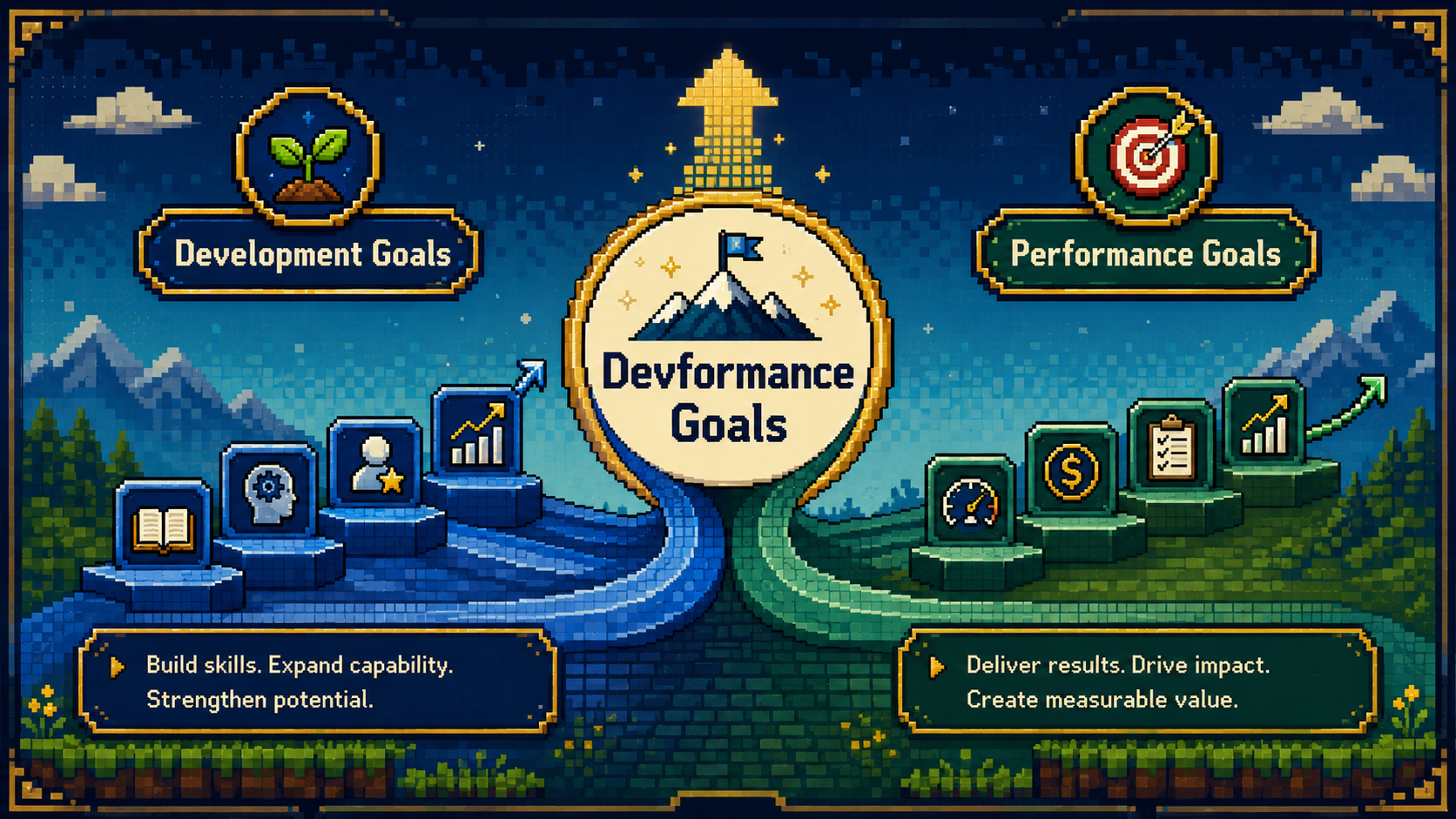
Devformance Goals: Combining Development and Performance
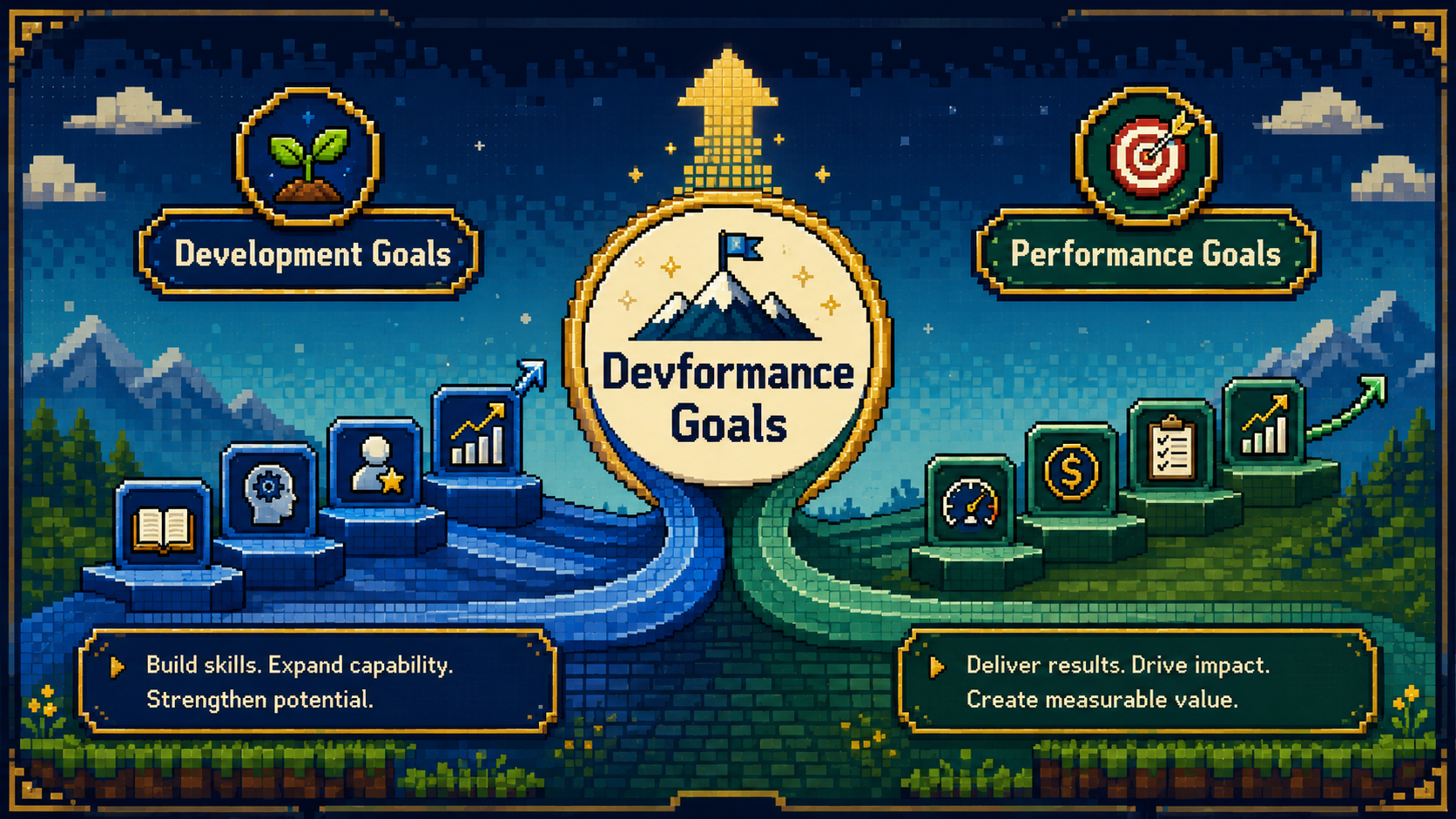
Most organisations separate development from performance.
One conversation asks: What do you need to learn? Another asks: What do you need to deliver?
I have never been convinced that these questions should live so far apart. Learning without application can become abstract, while performance without development can become unsustainable.
So why not connect them?
That is the idea behind what I call Devformance Goals.
A Devformance Goal combines a Development Goal with a Performance Goal. You develop a skill, capability or area of knowledge while using that development to achieve a measurable business outcome.
You do not only complete the level. You level up while doing it.
What is a Devformance Goal?
A Devformance Goal is a goal that deliberately combines development and performance in the same objective.
Traditional Development Goals focus on improving skills, knowledge or competencies. Traditional Performance Goals focus on delivering a specific result. Both matter, but they answer different questions.
A Development Goal might be:
Improve my data analytics capability.
A Performance Goal might be:
Reduce reporting turnaround time by 30%.
A Devformance Goal connects them:
Develop advanced data analytics capability and apply it to reduce reporting turnaround time by 30%.
Now learning has a purpose, and performance creates development.
That connection is the important part.
Development Goals build capability
Development Goals are primarily about becoming better equipped for the future. They might involve learning a new technology, developing leadership capability, improving negotiation skills, understanding a new market, strengthening communication, building financial knowledge or improving teamwork.
These goals may create significant long-term value even when they do not immediately produce a measurable financial outcome.
Think of an RPG. You spend time developing your character, acquiring new abilities, improving your equipment, increasing your stats and unlocking new parts of the skill tree.
You are becoming more capable.
But levelling up is not the objective of the game. Eventually, you need to use those abilities.
Performance Goals create the win condition
Performance Goals are different. They define what must actually happen.
Launch the product. Increase sales. Reduce cost. Improve service quality. Complete the project. Shorten cycle time. Increase customer satisfaction.
These are the mission objectives. They provide direction and a measurable definition of success.
The problem appears when performance becomes detached from capability. An organisation can continuously raise targets without asking whether the people expected to achieve them are developing the skills required to do so.
Eventually that becomes unsustainable.
You cannot indefinitely demand higher performance from the same capabilities, processes and resources. Something has to improve.
Why separate the two?
Imagine an employee development plan containing:
Improve presentation skills.
Fine. But why? Where will those skills be used? What will become better as a result?
Now imagine a performance target:
Increase executive approval of investment proposals.
Also reasonable. But perhaps one of the reasons proposals are struggling is that the person presenting them needs to become better at structuring complex information for senior decision-makers.
The two goals belong together.
A Devformance Goal could therefore be:
Develop executive presentation and storytelling skills and apply them to investment proposals, increasing first-round approval rates from X to Y.
The development is no longer a side activity. It becomes part of achieving the performance objective.
The problem with development that never leaves the classroom
Organisations spend significant amounts on training: courses, certifications, leadership programmes, conferences and learning platforms.
Some of that creates enormous value. Some of it becomes something employees complete because the system says they should.
The difference is often application.
You can attend an excellent course on negotiation, but if you never negotiate anything important afterwards, how much capability have you actually built? You can complete a data analytics programme, but if your job continues exactly as before, the organisation may never benefit from that investment.
Development becomes much more powerful when people have an immediate reason to use what they learn. That creates practice, feedback, iteration and eventually competence.
The opposite problem: performance without development
The opposite problem is just as common.
Someone performs well, so next year the target increases. They perform well again, and the target increases again. More responsibility arrives. More complexity. More stakeholders. More pressure.
But the person's capabilities, tools and support remain largely unchanged.
Eventually the system reaches its limit.
This is why development is not something that should happen only when performance is poor. High performers need development precisely because organisations expect them to keep performing in increasingly difficult environments.
Performance and development should reinforce each other.
Four ways to build Devformance Goals
There is no single template that works everywhere, but I find four combinations particularly useful.
1. Skill acquisition with a targeted outcome
Learn something new because achieving the performance objective requires it.
For example:
Develop advanced analytics capability and use it to reduce data analysis turnaround time by 30%.
The learning component is explicit, and so is the performance result.
This is much stronger than simply writing:
Complete advanced analytics training.
Completing the course is not really the objective. Using the capability is.
2. Competency improvement with measurable results
Sometimes the capability already exists. The objective is to become significantly better at it.
Imagine a leader responsible for improving an underperforming operation. A traditional Development Goal might be:
Improve Lean leadership capability.
The Performance Goal might be:
Reduce operating cost by 15%.
Combined:
Strengthen Lean leadership capability and apply it to redesign the operating model, targeting a 15% reduction in operating cost.
Again, capability and outcome reinforce each other.
3. Knowledge expansion with performance integration
Some objectives require deeper knowledge rather than a completely new skill. You might need to understand a market, a customer segment, a technology, a regulation, a competitor landscape or a business model.
The Devformance Goal should connect that knowledge directly to a decision or outcome.
For example:
Develop deeper knowledge of an emerging market and use that insight to create and execute the market-entry strategy.
Now "learning about the market" is not an isolated research exercise. It is preparation for execution.
4. Teamwork and leadership with goal alignment
Development does not have to be individual. Teams develop capabilities too.
A leader might need to become better at managing a distributed team while simultaneously delivering a difficult transformation.
A Devformance Goal might be:
Develop cross-functional leadership practices while leading the global team responsible for delivering the product launch on schedule.
The project becomes the environment in which leadership develops, and leadership development increases the probability that the project succeeds.
The performance target still needs to be credible
Combining learning and performance does not remove the fundamentals of good goal setting.
A bad target does not become good because you attach a development activity to it. The objective still needs appropriate ownership, assumptions, resources and alignment.
This connects directly to the Goal Trilemma.
The Goal Setter, Approver and Team Working Towards the Goal need a shared understanding of what is being asked. If someone is expected to learn an entirely new capability while simultaneously delivering an aggressive target, that additional learning effort needs to be recognised.
Development requires time. Practice requires time. Mistakes are part of learning.
Pretending otherwise simply hides another dependency inside the goal.
Do not confuse activity with development
Attend a leadership course is an activity.
Improve leadership capability is development.
Improve leadership capability and use it to increase the team's delivery reliability begins to resemble Devformance.
The objective is not the course. The objective is increased capability that contributes to improved performance.
That means the development side should also be observable. Did the person actually learn? Did behaviour change? Did the capability improve? Was it applied? Did it contribute to the intended result?
Training completion alone tells us very little.
Not every goal needs to be Devformance
I would not force this concept onto everything.
Some Performance Goals should simply be Performance Goals. Some Development Goals genuinely need space without an immediate business target attached. Learning something exploratory can create value that is impossible to quantify beforehand.
That is fine.
Devformance Goals are useful when there is a natural connection between what someone needs to become better at and what the organisation needs them to achieve.
Do not manufacture a connection simply to make the framework look complete.
The framework should serve the work, not the other way around.
Development can become a leading indicator of performance
There also matters for performance-management implication.
If future performance depends on capabilities that do not yet exist, development itself becomes part of the performance chain.
Suppose an organisation wants to automate a major process. The final Outcome KPI might be cost reduction. Before that comes process improvement. Before that comes technology adoption. But somewhere even earlier, people may need new skills to design, operate or manage the automated process.
Capability development therefore becomes an early signal.
If six months into the transformation nobody has developed the required skills, the final financial result may already be at risk.
That is why human capability belongs inside Enterprise Performance Management. People are not separate from execution. They are part of the system that produces it.
Devformance and the growth mindset
I also like how this changes the relationship with performance.
Development creates a different psychological relationship with performance.
A pure Performance Goal can become binary: hit or miss, green or red.
A Devformance Goal contains another dimension. What did we learn? What capability did we build? What are we now able to do that we could not do before?
That does not mean poor results should be excused because somebody learned something. Performance still matters.
But an organisation that continuously builds capability while pursuing results is better positioned for the next challenge than one that looks only at the current score.
Careers already work this way
When I look at my own career, most of the important development did not happen separately from work.
I learned by moving into unfamiliar environments: engineering, offshore operations, investment and portfolio management, transformation, performance management and data.
Each new challenge required me to learn something I did not fully understand before. And the learning mattered because there was an actual problem to solve.
That combination is powerful.
You are not learning because a development plan says you should. You are learning because you need the capability to succeed.
The mission creates the motivation. The development improves your chances of completing the mission.
How to write a Devformance Goal
A simple structure is:
Develop [capability] and apply it to [performance objective], measured by [result].
For example:
Develop advanced stakeholder-management capability and apply it to the transformation programme, increasing milestone acceptance from 70% to 90%.
Or:
Build advanced data-modelling skills and use them to automate the monthly reporting process, reducing preparation time from five days to two.
Or:
Develop coaching capability and apply it across the team, increasing internal readiness for critical roles over the next twelve months.
The exact wording matters less than the logic. There should be a visible connection between what you are learning and what that learning should help you achieve.
Review both sides of the goal
When reviewing a Devformance Goal, do not only ask whether the final KPI was achieved. Ask two sets of questions.
Development: What capability was supposed to improve? Did it improve? How do we know? Was the new capability actually applied?
Performance: What outcome was expected? Was it achieved? What contributed to the result? What prevented it?
Then look at the connection between them.
Did the development actually help performance?
If not, perhaps the wrong capability was developed. Or perhaps the assumed relationship between capability and outcome was wrong.
That is useful information too.
Development is an investment in future performance
Organisations often talk about people as their most important asset. The real test is whether they invest accordingly.
Development should not be something squeezed into whatever time remains after "real work" is finished. Building capability is part of the real work when future performance depends on it.
At the same time, development becomes more credible when it connects to genuine organisational needs.
That is the balance Devformance Goals try to create.
Development gives people the capacity to take on bigger challenges. Performance gives development direction and application.
One prepares you for the next level. The other gives you a reason to reach it.
Put them together and you get something more powerful than either one alone.
You do not only beat the level. You become a better player while doing it.
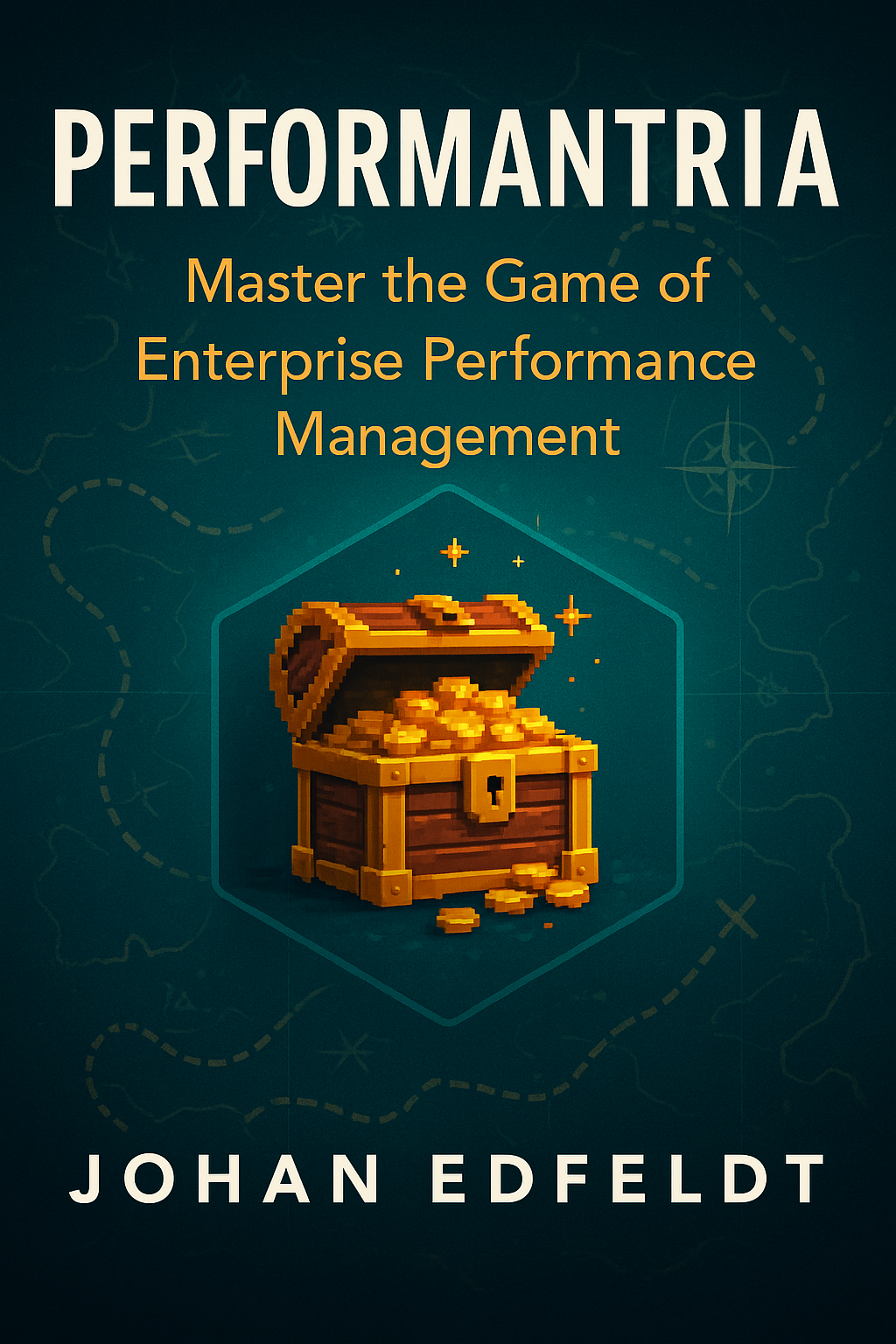
This article develops the Devformance Goals concept originally explored through my EPM Mondays series and later expanded in Performantria: Master the Game of Enterprise Performance Management.
Explore the full Performantria framework for Enterprise Performance Management.


Download the e-book for FREE!
Two years ago I unveiled the icy world that is Polar in my book "Polar: The Ice Dragon's Curse." Life is too short not to celebrate, so today and the next couple of days you can download the e-book for FREE!
I got my inspiration to write Polar from many late nights with my friends playing Drakar & Demoner (similar to, but not the same as, Dungeons & Dragons). I saw these two dwarves sitting by a small fire that barely popped on the frozen tundra and thought—what are their purpose? What do they aspire to besides just staying alive?
That's where my story started. They were in a cold place, but why was it cold and what could they do not to perish?
I remember the drilling fluids from my offshore days being referred to as "Mud" and thought that was a fitting name for a fluid that kept these two warriors warm.
But I needed magic – as I so often do – so I thought we should make the bad guys the elves who had enslaved magic through their fire bracelets.
But then again, I wanted to make a comment on the world's ever-turning towards consumption and aspiration of getting more of something expensive instead of chasing what is free. So then I saw it: True Love. Known to put fire in people's hearts, I saw that as my take on overcoming the coldness.
So welcome to the world of old magic, freezing cold landscapes, and an unlikely band of heroes coming together to end the reign of the Ice Dragon Claymore.
What moment sparked your biggest creative breakthrough? I'd love to hear about it.
📖 Grab your free copy: https://a.co/d/cF1nkCp
hashtag#Fantasy hashtag#Writing hashtag#BookPromo hashtag#Storytelling

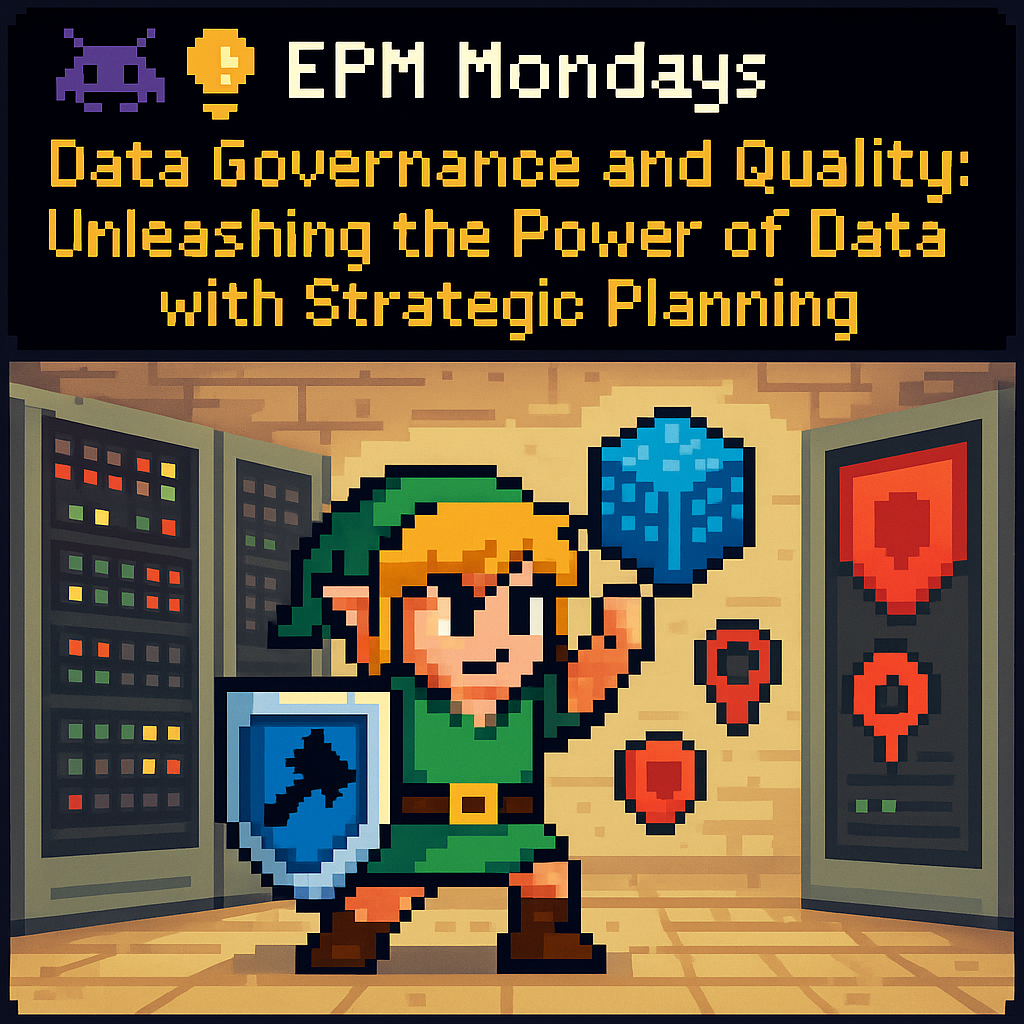
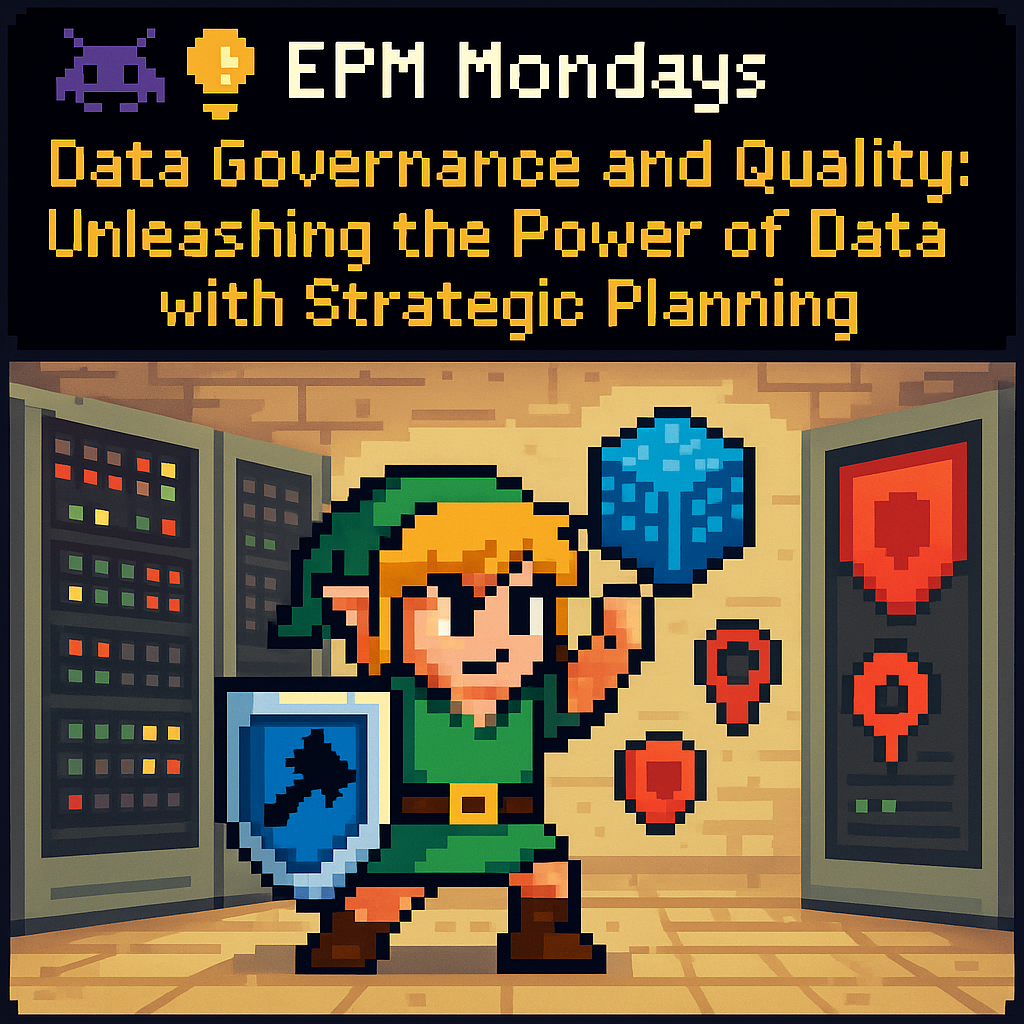
Why Data Governance Is the Foundation of Performance Management
Everyone wants better dashboards.
Better analytics.
Better AI.
Better decisions.
But there is an uncomfortable problem underneath all of them.
What if the data is wrong?
A beautiful dashboard built on weak definitions, inconsistent master data or unclear ownership is still a beautiful presentation of uncertainty.
That is why I see Data Governance as one of the foundations of Enterprise Performance Management.
You cannot reliably manage performance if you cannot reliably understand the data beneath it.
Performance management starts below the dashboard
When people discuss performance management, they often start with the visible layer.
KPIs.
Scorecards.
Dashboards.
Reports.
Those are important, but they sit surprisingly high in the information chain.
Underneath every KPI are definitions, calculations, business rules, master data, transactional data, systems and people responsible for maintaining all of it.
If those foundations are weak, problems eventually surface further up.
Two departments report different versions of the same number.
A KPI suddenly changes because a definition changed.
A product appears differently across systems.
A customer is duplicated.
A calculation works technically but measures something nobody intended.
Then the meeting that should be about performance becomes a meeting about data.
That is expensive.
A dashboard cannot compensate for weak foundations
This is a principle I keep coming back to.
A dashboard cannot compensate for weak foundations.
Technology can make data easier to process, visualise and distribute.
It cannot automatically make the underlying information trustworthy.
If a source contains duplicates, the dashboard can display duplicates faster.
If ownership is unclear, automation can scale the uncertainty.
If definitions differ between systems, AI can summarise the disagreement beautifully.
The technology is not necessarily the problem.
The foundations are.
What is Data Governance?
Data Governance provides the structure for deciding how important data should be defined, owned, maintained, protected and used.
It establishes accountability.
Who owns this data?
Who maintains it?
Who can change it?
Which definition is authoritative?
Which system is the source?
How do we measure quality?
What happens when something is wrong?
Good governance makes those questions answerable.
It should not exist simply because an organisation wants a governance framework.
It should make the organisation easier to operate.
Governance is not the same as bureaucracy
There is always a risk that governance becomes synonymous with committees, documentation and approval chains.
That is not the objective.
Good governance should reduce friction.
If everybody knows the authoritative definition, there are fewer debates.
If ownership is clear, issues move faster to the right person.
If standards are built into normal processes, fewer defects need to be corrected later.
If metadata explains what data means, users spend less time reverse-engineering dashboards.
Governance should therefore be embedded as closely as possible into normal business processes.
The goal is not more governance activity.
The goal is better-controlled data.
Start with ownership
One of the simplest questions in Data Governance is also one of the most powerful:
Who owns the data?
Someone needs accountability for important data domains.
That does not mean the owner personally updates every record.
It means somebody is accountable for ensuring that the data is fit for its business purpose.
The Data Owner provides that accountability.
But ownership alone is not enough.
You also need people working much closer to the data.
That is where Data Stewards become critical.
The role of the Data Steward
I think of Data Stewards as the guardians of organisational data.
They work closer to the day-to-day reality and help make sure data remains accurate, complete, consistent, usable and properly controlled.
Depending on the organisation, stewardship may be a dedicated position or part of another role.
The title matters less than the responsibility.
Typical stewardship activities include maintaining data quality, supporting users, monitoring standards, handling or reviewing master data changes, helping resolve issues and working with Data Owners to improve the data over time.
Without stewardship, governance risks remaining theoretical.
Policies may exist.
Standards may exist.
But nobody is actively protecting them where the data is created and changed.
Master Data matters more than people think
Some data objects appear again and again across an organisation.
Products.
Customers.
Suppliers.
Locations.
Contracts.
Employees.
Organisational units.
These are examples of Master Data.
They may look simple.
They rarely are.
A Product can have a commercial definition, financial classification, operational representation, technical configuration and reporting hierarchy.
If different systems describe that product differently, the problem travels downstream.
Sales may quote one thing.
Operations execute another.
Finance reports something slightly different.
Analytics tries to reconcile all three.
That is why Master Data Management is not simply a technical data exercise.
It is part of operating the enterprise.
Definitions are data too
Many performance problems are really definition problems.
Imagine two people discussing revenue.
One includes a certain category.
The other excludes it.
Both calculations are technically correct according to their own definitions.
The meeting can continue for an hour without anyone realising they are discussing different things.
Metadata helps prevent this.
Metadata is data about data.
It explains context such as:
What does this field mean?
Where does it originate?
How is it calculated?
Who owns it?
Which system uses it?
How does it relate to other data?
In gaming terms, metadata is the map.
You can explore without one.
You will just spend considerably more time getting lost.
Data Quality must be measurable
Saying that data should be "high quality" is not enough.
Quality needs dimensions.
Depending on the data, you might assess things such as:
Completeness.
Accuracy.
Consistency.
Validity.
Timeliness.
Uniqueness.
The important part is choosing dimensions that actually matter for the business use case.
If a field is mandatory but nobody needs it, 100% completeness may tell you very little.
If a customer identifier must connect transactions across five systems, uniqueness and consistency may be critical.
Data Quality should therefore always be connected to purpose.
First time right beats endless cleansing
There is also an important difference between preventing data defects and cleaning them afterwards.
Organisations can spend enormous amounts of effort cleansing poor data downstream.
That may be necessary.
But the stronger solution is usually to move closer to the point where the data is created.
Why was the wrong value possible?
Was the definition unclear?
Was validation missing?
Did the user lack the information needed?
Did two systems allow different structures?
Was ownership unclear?
The further downstream you fix the problem, the more places the defect may already have travelled.
A "first time right, every time" mindset is therefore much more powerful than an endless cycle of cleansing.
Not because perfection is realistic.
But because prevention scales better than repair.
Data Governance and EPM are inseparable
Now return to Enterprise Performance Management.
Suppose leadership is reviewing an important KPI.
For that KPI to be trustworthy, several things need to be true.
The definition must be understood.
The calculation needs to be correct.
The source data needs sufficient quality.
The relevant master data must be consistent.
The refresh timing needs to be understood.
Ownership should be clear.
Changes need to be governed.
Only then can leadership confidently discuss the performance represented by the number.
Otherwise, the performance review becomes:
"Where did this number come from?"
"Why is Finance showing something else?"
"Has the definition changed?"
"Can somebody check this after the meeting?"
At that point, Data Governance has become a performance problem.
Data Quality is not an IT problem
Another mistake is treating data quality as something the technology organisation should fix.
IT operates and supports important parts of the data environment.
But business data usually describes the business.
Product definitions require Product knowledge.
Customer data requires commercial understanding.
Financial data requires Finance.
Operational data requires operational expertise.
That is why Data Governance needs both business and technology.
The business provides meaning and accountability.
Technology provides systems, controls, integration and scale.
Neither side can do it properly alone.
Better AI makes governance more important, not less
As analytics and AI become more capable, the quality of the underlying information becomes even more important.
AI can process an enormous amount of information.
But scale works both ways.
Reliable data can create better insight faster.
Poor data can spread ambiguity faster.
Before asking whether an organisation is AI-ready, I would therefore ask some much less glamorous questions.
Do we understand our critical data?
Do we know who owns it?
Do we trust the definitions?
Can we trace where it comes from?
Do we understand its quality?
Can important systems connect the same business objects consistently?
Those foundations will matter regardless of which AI technology comes next.
Governance should improve decisions
This is the test I would apply to any Data Governance initiative.
Does it improve the organisation's ability to make decisions and execute?
If not, examine why.
Maybe the governance is too theoretical.
Maybe ownership exists only on paper.
Maybe policies are impossible to find.
Maybe Data Stewards lack authority.
Maybe the organisation measures governance activity rather than data outcomes.
The objective is not to prove that governance exists.
The objective is to make important data more reliable, understandable and usable.
Build from the business backwards
A useful starting point is not:
"What governance framework should we implement?"
Start with:
Which business decisions depend on reliable data?
Then work backwards.
Which KPIs support those decisions?
Which data feeds the KPIs?
Which master data objects do those processes depend on?
Which systems create and consume them?
Who owns the definitions?
Who stewards the data?
Where are the quality problems?
Now governance has a purpose.
And that purpose connects directly to performance.
Data is part of the operating model
Ultimately, data is not something sitting beside the business.
It is part of how the business operates.
Products are data.
Customers are data.
Contracts are data.
Transactions are data.
KPIs are data.
Strategy itself eventually becomes translated into objectives, targets and measures that depend on data.
This is why Data Governance belongs inside Enterprise Performance Management.
Without trustworthy data, leaders cannot reliably see performance.
Without clear ownership, defects persist.
Without metadata, meaning is lost.
Without Master Data Management, systems drift apart.
And without those foundations, increasingly sophisticated technology simply gives us more sophisticated uncertainty.
Good performance management therefore does not begin with the dashboard.
It begins with the data beneath it.
This article brings together ideas originally explored through my EPM Mondays series and later expanded in Performantria: Master the Game of Enterprise Performance Management.
Explore the full Performantria framework for Enterprise Performance Management.
🌨️ The 2025 Edition of Polar: The Ice Dragon’s Curse is here!
This new version of Polar comes with a fully redesigned world map, a new foreword, updated character descriptions, and full Kindle X-Ray support. If you're reading on a Kindle device or app, you can now tap on names or places to instantly get background info—without ever leaving the page.
Already own the ebook? Just re-download it to get the update. 👉 Buy it on Amazon
“Dream until your mind is at ease… Dream until the world is at peace.”
This story began with two dwarves huddled by a dying fire. I had no idea what they were chasing—only that it mattered. That image sparked a world. From there came Aether and Mud, frost and flame, falcon spears and dragons, spellcasters and thieves, priests and princesses. It became a world where true love is rarer than gold—and more powerful than anything else.
If you’ve been with the series since the beginning: thank you. If you're just discovering Polar: welcome. The 2025 edition is truer to the soul of the story than ever before—and it moves fast. Really fast. No waiting around. No filler. Just the chase.
🔗 Click here to get the new edition on Amazon
Or scroll down to explore the new world map and cast of characters.
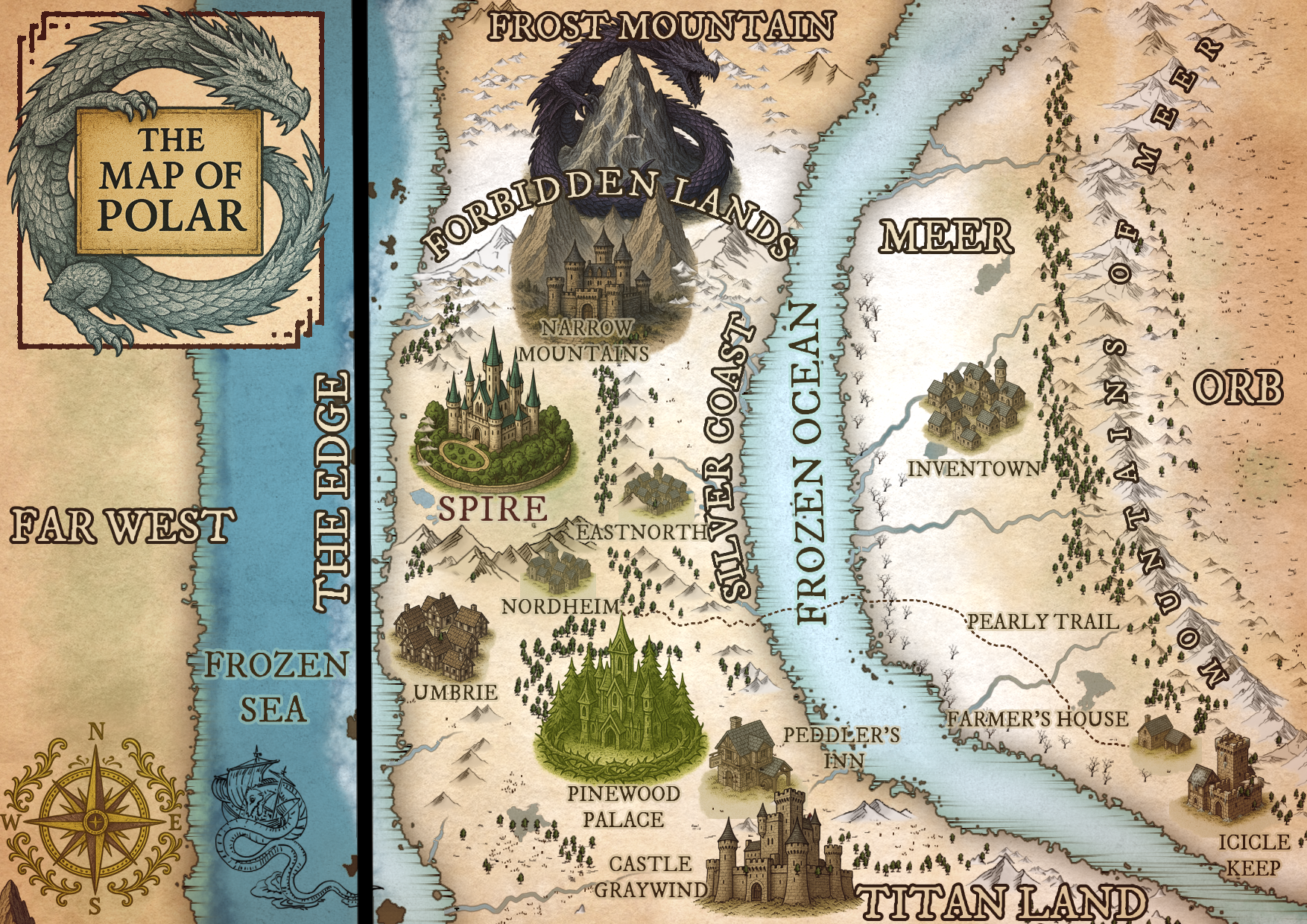
The Map of Polar